
Zap 3 or 4 whole unpeeled garlic cloves in the microwave for about 20 seconds (or you can roast them in the oven, of course). Then simply pop them out of the peels for this recipe.
Combine in blender:
Garlic cloves
A 15-oz. can of garbanzo beans, including liquid (a 16-oz. can would be fine too, if that's what you have)
1/8 cup olive oil
2 to 3 teaspoons of apple cider vinegar or lemon juice
1/4 tsp salt
1/8 tsp ground black pepper
1/4 to 1/2 teaspoon ground cumin
Blend until smooth. You may have to pulse it and stop occasionally to stir with a spoon to release a trapped air bubble, as this is very thick. You can add a bit more olive oil, plain yogurt or water if necessary to blend it.
Serve with crackers, bread, chips, raw vegetables and/or whatever else you like to dip. :)
Feel free to tweak the amounts of seasonings, or to add your favorite flavor--sun-dried tomatoes, roasted red peppers, kalamata olives or fresh green herbs instead of the cumin might be tasty (though probably not all together. :) ). If your beans aren't already salted, you may want to increase the salt.
Showing posts with label vegan. Show all posts
Showing posts with label vegan. Show all posts
Wednesday, June 22, 2011


Sunday, April 24, 2011
Quinoa Apple Salad
This recipe is modified from Martha Stewart's Curried Quinoa Apple Salad recipe.
Rinse 1 cup of dry quinoa well and cook with 2 cups of water. I bring it to a boil in a covered pot, then turn off the burner and leave the pot on the stove for about 20 minutes for perfectly cooked quinoa.
In a separate container mix together for the dressing:
2 tablespoons apple cider vinegar or lemon juice
2 to 3 tablespoons olive or grapeseed oil
1 teaspoon curry powder (I use a nightshade free curry powder and heap the measurement a bit)
1/4 to 1/2 teaspoon sweet spice (optional--this is a mixture with cinnamon, cardamom and other sweet spices by the same manufacturer that makes the curry powder I use; I will edit the post to add the name later)
1/4 teaspoon coarse salt
1 tablespoon diced shallot
Stir the dressing into the cooled cooked quinoa, add 1 diced apple (grannysmith or Gala apples are good in this recipe) and 2 tablespoons currants.
This recipe is excellent chilled. I usually make a double batch and keep it in the refrigerator for a ready-made quick snack.
Monday, June 07, 2010
Rice Cream Porridge
Cook 1 cup of brown rice (we like short-grain or sweet rice for this recipe) with 2 cups of water and 1/2 tsp salt (salt optional) until rice is done cooking and water is absorbed.
Add cooked rice and enough rice milk, milk, dairy substitute or water to process in blender. Blend until smooth.
Serve and enjoy! You may add toppings such as fruit, nuts or sweetener if desired, but it's good plain too.
Add cooked rice and enough rice milk, milk, dairy substitute or water to process in blender. Blend until smooth.
Serve and enjoy! You may add toppings such as fruit, nuts or sweetener if desired, but it's good plain too.
Thursday, February 11, 2010
Flaxseed egg substitute
For 1 egg: 1 Tbs ground flax seed, mixed with 3 Tbs hot water
For 2 eggs (in some recipes, this amount can substitute for 1 large egg): 2 Tbs. ground flax seed, 1/4 cup hot water
You can either just let this sit for a while and then add to the recipe, or you can cook the flaxseed and water until gelled, let it cool and then if desired you can whip it to add more lift to your baked goods. You may need to add 1-2 Tbsp more water for the cooked and whipped version.
Another thing I've done when I want to substitute for 1 to 4 eggs is just add 1/4 cup or so of flaxseed meal to my recipe and increase the liquid a bit if needed. Flax seed contains quite a bit of oil, so you may be able to omit or reduce other oils in the recipe. It's pretty flexible, so you can play with the amounts without hurting your baked goods too much.
I do recommend using ground flax seed, or grinding it in a coffee grinder or spice mill to release the oils and the nice sticky compounds in the flaxseed that make it a good binder in baked goods.
If you're trying to make something like waffles and they are sticking, either grease your griddle better or try adding another tablespoon of flax seed and the corresponding amount of water.
For 2 eggs (in some recipes, this amount can substitute for 1 large egg): 2 Tbs. ground flax seed, 1/4 cup hot water
You can either just let this sit for a while and then add to the recipe, or you can cook the flaxseed and water until gelled, let it cool and then if desired you can whip it to add more lift to your baked goods. You may need to add 1-2 Tbsp more water for the cooked and whipped version.
Another thing I've done when I want to substitute for 1 to 4 eggs is just add 1/4 cup or so of flaxseed meal to my recipe and increase the liquid a bit if needed. Flax seed contains quite a bit of oil, so you may be able to omit or reduce other oils in the recipe. It's pretty flexible, so you can play with the amounts without hurting your baked goods too much.
I do recommend using ground flax seed, or grinding it in a coffee grinder or spice mill to release the oils and the nice sticky compounds in the flaxseed that make it a good binder in baked goods.
If you're trying to make something like waffles and they are sticking, either grease your griddle better or try adding another tablespoon of flax seed and the corresponding amount of water.
Thursday, February 28, 2008
Healthy Chocolate Smoothie
Place in blender:
1 ripe banana
8-10 oz. water, milk, kefir, or dairy substitute
[optional] A handful (about 1/8 to 1/4 cup) of raw cashews, blanched almonds, or nuts/seeds of your choice.
1 Tablespoon unsweetened powdered baking cocoa (if you prefer your chocolate less dark, reduce to 1-2 teaspoons, or substitute carob if desired)
About 1 cup ice, as desired (crushed ice works best)
Blend until smooth and enjoy!
I make this in a personal-size blender with just water, cashews, banana, cocoa and ice. It makes a quick snack high in protein and free of grains and refined sugars. The banana is sweet enough that no other sweetener is necessary. This is my standby when I get chocolate and/or sugar cravings. It satisfies my sweet tooth without giving me the later energy/mood crash or heightened cravings I usually get when eating sugary chocolate.
For a NT-style smoothie, use raw milk, kefir or coconut milk and soak or sprout any nuts or seeds before blending.
1 ripe banana
8-10 oz. water, milk, kefir, or dairy substitute
[optional] A handful (about 1/8 to 1/4 cup) of raw cashews, blanched almonds, or nuts/seeds of your choice.
1 Tablespoon unsweetened powdered baking cocoa (if you prefer your chocolate less dark, reduce to 1-2 teaspoons, or substitute carob if desired)
About 1 cup ice, as desired (crushed ice works best)
Blend until smooth and enjoy!
I make this in a personal-size blender with just water, cashews, banana, cocoa and ice. It makes a quick snack high in protein and free of grains and refined sugars. The banana is sweet enough that no other sweetener is necessary. This is my standby when I get chocolate and/or sugar cravings. It satisfies my sweet tooth without giving me the later energy/mood crash or heightened cravings I usually get when eating sugary chocolate.
For a NT-style smoothie, use raw milk, kefir or coconut milk and soak or sprout any nuts or seeds before blending.
Sunday, July 22, 2007
Mild Masoor Dal (Red Lentils)

Dal, or dahl, has any number of variations. This version is made with the lovely, mild and quick-cooking red lentils.
The flavors are mild enough for my family's blandness-loving palate, although I would have liked it a bit more spicy myself. If you like more spicy foods, try doubling the cumin, turmeric and/or mustard. You could also add a clove of garlic and a sauted onion, or your favorite vegetable(s).
If you are allergic to a spice, just leave it out or substitute something you like. Any grain can be used instead of rice, or you could just serve the dahl as a sauce over lettuce, tofu or meat. Serving a legume with a grain, such as rice, makes a complete protein.
Mild Masoor Dal
Makes 4-6 servings.
Soak 1 cup of red lentils (hulled and split), or masoor dal, overnight in about 4 cups of water and the juice of half a lemon (about a tablespoon) or a splash of vinegar. If you will be serving the dal over rice, soak the rice in water as well (I soaked 2 cups of rinsed brown rice in 4 cups of water for almost 24 hours). This step is optional, but disables the antinutrient phytic acid in the grains, making them more digestible.
Drain and rinse the soaked lentils, combine with 3 and 1/2 cups of water (4 cups water if you didn't soak them), and bring to a boil.
Turn the pot down to a simmer over medium-low heat and add:
1/2 tsp ground cumin seed
1 tsp crushed coriander seed
1/8 tsp turmeric powder
1/8 tsp powdered mustard
1/2 tsp salt (wait to add salt until the last few minutes of cooking)
Cook for about 30 to 45 minutes or until lentils are tender. Serve on flatbread or over cooked rice. I started the dal cooking and then put my soaked rice into the rice cooker, and they both got done about the same time.
This dal is very good served over cooked rice. I cooked 2 cups of soaked brown rice with 4 cups water and 1/2 teaspoon sea salt.
To serve as in the photo, start with a bed of leaf lettuce. I used one large leaf with more salad on the side, but a thicker layer of lettuce ripped into bite-sized chunks might work better under the dal. Put a good-sized portion of rice on top. Ladle a spoonful of lentil mixture over the rice and garnish each plate with chopped green onions or chives.
If you can tolerate dairy products, you might want to try making the dal more spicy and adding a spoonful of sour cream or plain yogurt under the green onions.
Thursday, July 05, 2007
Cumin-Sausage Lentil Soup
Combine in large pot, dutch oven or slow-cooker (crock pot):
2 cups uncooked dried lentils, rinsed well
1 cup uncooked brown rice, rinsed well
8 cups water
1/2 to 1 medium onion, diced
1 clove garlic, crushed
2 large carrots, sliced
1/4 teaspoon cumin
Stir ingredients together. (Note: When cooking dried beans, do not add salt, sugar, or an acid at the beginning of cooking, as these can keep them from getting tender.)
If cooking in slow-cooker, put on the lid and turn on the crockpot. I put this soup together in the afternoon and cooked it on low for 2-3 hours and then on high for a couple more hours, and it was getting quite soft and mushy by the time we ate it. If you are making it in the morning, I would think cooking on low all day should be fine.
If cooking on the stovetop, bring to a boil and then turn down to a simmer. Simmer about 1 hour.
In the last few minutes of cooking (or during the last 1/2 to 1 hour, if using a crockpot), add:
2 tsp salt
1/2 to 1 lb. cooked sausage, optional (I buy a safe uncured sausage made with just meat and fresh herbs at a local butcher shop [Butcher Boys' ground Italian or Breakfast sausage], or there are a few safe brands of chicken sausage available commercially)
1/8 to 1/4 tsp powdered ginger (optional)
1/8 tsp more cumin (optional--leave out for a milder flavor)
2-4 tablespoons snipped fresh chives (optional--you can stir this in just before serving or use it as a garnish on top of soup after dishing into bowls if desired)
When the lentils and rice are tender and all ingredients are heated thoroughly, the soup is done. The lentils and rice make a complete protein, so the sausage is completely optional--it's added more for flavor. You can leave out the meat for a vegan dish.
This soup is wonderful served with a salad of mixed greens (I used red and green leaf lettuce and baby spinach)
Other flavors that might be good in this soup would be a sprinking of black pepper, some basil and coriander or anise seed, or a touch of honey.
2 cups uncooked dried lentils, rinsed well
1 cup uncooked brown rice, rinsed well
8 cups water
1/2 to 1 medium onion, diced
1 clove garlic, crushed
2 large carrots, sliced
1/4 teaspoon cumin
Stir ingredients together. (Note: When cooking dried beans, do not add salt, sugar, or an acid at the beginning of cooking, as these can keep them from getting tender.)
If cooking in slow-cooker, put on the lid and turn on the crockpot. I put this soup together in the afternoon and cooked it on low for 2-3 hours and then on high for a couple more hours, and it was getting quite soft and mushy by the time we ate it. If you are making it in the morning, I would think cooking on low all day should be fine.
If cooking on the stovetop, bring to a boil and then turn down to a simmer. Simmer about 1 hour.
In the last few minutes of cooking (or during the last 1/2 to 1 hour, if using a crockpot), add:
2 tsp salt
1/2 to 1 lb. cooked sausage, optional (I buy a safe uncured sausage made with just meat and fresh herbs at a local butcher shop [Butcher Boys' ground Italian or Breakfast sausage], or there are a few safe brands of chicken sausage available commercially)
1/8 to 1/4 tsp powdered ginger (optional)
1/8 tsp more cumin (optional--leave out for a milder flavor)
2-4 tablespoons snipped fresh chives (optional--you can stir this in just before serving or use it as a garnish on top of soup after dishing into bowls if desired)
When the lentils and rice are tender and all ingredients are heated thoroughly, the soup is done. The lentils and rice make a complete protein, so the sausage is completely optional--it's added more for flavor. You can leave out the meat for a vegan dish.
This soup is wonderful served with a salad of mixed greens (I used red and green leaf lettuce and baby spinach)
Other flavors that might be good in this soup would be a sprinking of black pepper, some basil and coriander or anise seed, or a touch of honey.
Wednesday, June 20, 2007
Chocolate Zucchini Cake
This started out as a brownie recipe, but I think it has more of a cake consistency. It's moist and chocolatey--yum! Nuts could be stirred in before baking if desired.
Preheat oven to 350 degrees F and oil a rectangular pan.
Mix together and set aside:
1/4 cup flaxseed meal
3/4 cup boiling water
Sift together until blended:
2 cups whole grain flour (I used King Arthur White Whole Wheat, but any flour should work. I think even a gluten-free flour should work with this recipe, although it may require longer baking. If you test the recipe that way, please let me know how it turns out.)
1/2 cup tapioca flour
1 and 1/2 teaspoons baking soda
1 teaspoon salt
1/2 cup unsweetened cocoa powder (I use Hershey's)
In blender, combine and blend until smooth:
1/2 cup sourdough starter, applesauce, or yogurt (chocolate, vanilla or plain) [optional--cake will be denser if left out]
1/3 cup oil
1 cup honey
2 medium peeled/sliced zucchini (about 2 cups worth after processing)
To dry ingredients, add zucchini mixture and flaxseed mixture. Stir just until blended and pour into oiled pan.
If desired, sprinkle batter with 3/4 cup chocolate chips. I used Enjoy Life chocolate chips and pressed them in to the batter a bit.
Bake at 350 for 40-50 minutes or until a toothpick comes out almost clean. I used a pan smaller than a traditional cake pan, so ended up baking it for about an hour because it made the batter deeper.
(Note: I recently made this cake and forgot to put in any sourdough starter, fruit or yogurt. It was fine without the acid--a little denser, more brownie-like. I mixed about a cup of Enjoy Life choc. chips before pouring the batter into the pan, and it was good.)
Preheat oven to 350 degrees F and oil a rectangular pan.
Mix together and set aside:
1/4 cup flaxseed meal
3/4 cup boiling water
Sift together until blended:
2 cups whole grain flour (I used King Arthur White Whole Wheat, but any flour should work. I think even a gluten-free flour should work with this recipe, although it may require longer baking. If you test the recipe that way, please let me know how it turns out.)
1/2 cup tapioca flour
1 and 1/2 teaspoons baking soda
1 teaspoon salt
1/2 cup unsweetened cocoa powder (I use Hershey's)
In blender, combine and blend until smooth:
1/2 cup sourdough starter, applesauce, or yogurt (chocolate, vanilla or plain) [optional--cake will be denser if left out]
1/3 cup oil
1 cup honey
2 medium peeled/sliced zucchini (about 2 cups worth after processing)
To dry ingredients, add zucchini mixture and flaxseed mixture. Stir just until blended and pour into oiled pan.
If desired, sprinkle batter with 3/4 cup chocolate chips. I used Enjoy Life chocolate chips and pressed them in to the batter a bit.
Bake at 350 for 40-50 minutes or until a toothpick comes out almost clean. I used a pan smaller than a traditional cake pan, so ended up baking it for about an hour because it made the batter deeper.
(Note: I recently made this cake and forgot to put in any sourdough starter, fruit or yogurt. It was fine without the acid--a little denser, more brownie-like. I mixed about a cup of Enjoy Life choc. chips before pouring the batter into the pan, and it was good.)
Sunday, April 01, 2007
Flourless Potato Cookies
These cookies are grain-free and vegan. They are made almost completely with potatoes and some sweetener. They're quite sweet and rich-tasting, especially with chocolate or white chocolate baking chips in them. My husband thinks the texture is like French Fries, although the taste is different.
The brands in parenthesis are what I used when developing this recipe. Since different varieties of potato flour perform differently in baking, you may need to experiment with leaving out the water or adding more liquid if you use other brands of ingredients.
To make these cookies Kosher for Passover, use all K for P ingredients. If you are sulfite-sensitive, this would not be a good recipe to try since potato chips, starch and flour are all likely to contain sulfites.
2/3 cup potato flour (Bob's Red Mill)
1/3 cup potato starch (Manischewitz Kosher for Passover)
1/2 teaspoon baking powder (Featherweight corn-free gluten-free, or see this post for baking powder substitutes)
1/2 cup honey (Fred Meyer pure clover honey)
1/2 cup brown sugar (C & H pure cane sugar)
1/3 cup oil (Trader Joe's grapeseed oil)
2 tablespoons water
1 cup coarsely crushed potato chips (Manischewitz Kosher for Passover Potato Stix)
(optional) 1/2 cup of your favorite mix-in (I used a mixture of Lieber's decorating chips [white chocolate] and Oppenheimer chocolate chips, both Kosher for Passover)
(optional) 1 teaspoon of your favorite flavoring (safe vanilla, ground cinnamon, etc.)
Sift together potato flour, starch, and baking powder. If adding a dry spice, add it with the potato flour.
In a separate container, blend oil, sugar, water and honey. If you're using a liquid flavoring, add it with the liquid ingredients. The oil may not blend into the other ingredients well, and that's okay.
Add the liquid ingredients to the dry ingredients and blend as well as you can with a spoon. If you have trouble stirring, knead the misture with your hands until smooth.
Stir or knead in the potato chips and the mix-in. Drop by tablespoons onto a cookie sheet. Do not flatten the tops of these cookies; the rounder they are the better the texture will be.
Bake at 350 degrees Fahrenheit for about 8 minutes. They will be golden-brown around the edges and will still be a bit soft and gooey when you remove them from the pan, but stiffen up as they cool.
Best served warm.
The brands in parenthesis are what I used when developing this recipe. Since different varieties of potato flour perform differently in baking, you may need to experiment with leaving out the water or adding more liquid if you use other brands of ingredients.
To make these cookies Kosher for Passover, use all K for P ingredients. If you are sulfite-sensitive, this would not be a good recipe to try since potato chips, starch and flour are all likely to contain sulfites.
2/3 cup potato flour (Bob's Red Mill)
1/3 cup potato starch (Manischewitz Kosher for Passover)
1/2 teaspoon baking powder (Featherweight corn-free gluten-free, or see this post for baking powder substitutes)
1/2 cup honey (Fred Meyer pure clover honey)
1/2 cup brown sugar (C & H pure cane sugar)
1/3 cup oil (Trader Joe's grapeseed oil)
2 tablespoons water
1 cup coarsely crushed potato chips (Manischewitz Kosher for Passover Potato Stix)
(optional) 1/2 cup of your favorite mix-in (I used a mixture of Lieber's decorating chips [white chocolate] and Oppenheimer chocolate chips, both Kosher for Passover)
(optional) 1 teaspoon of your favorite flavoring (safe vanilla, ground cinnamon, etc.)
Sift together potato flour, starch, and baking powder. If adding a dry spice, add it with the potato flour.
In a separate container, blend oil, sugar, water and honey. If you're using a liquid flavoring, add it with the liquid ingredients. The oil may not blend into the other ingredients well, and that's okay.
Add the liquid ingredients to the dry ingredients and blend as well as you can with a spoon. If you have trouble stirring, knead the misture with your hands until smooth.
Stir or knead in the potato chips and the mix-in. Drop by tablespoons onto a cookie sheet. Do not flatten the tops of these cookies; the rounder they are the better the texture will be.
Bake at 350 degrees Fahrenheit for about 8 minutes. They will be golden-brown around the edges and will still be a bit soft and gooey when you remove them from the pan, but stiffen up as they cool.
Best served warm.
Thursday, March 22, 2007
Creamless Cream of Cauliflower Soup
This recipe is adapted from Feast Without Yeast by Bruce Semon.
I usually make it with just cauliflower and potatoes, but sometimes I'll add an onion or some red bell pepper. The original recipe called for adding an optional mild poblano pepper. If you can't tolerate nightshades, try substituting one or two large yucca (cassava) roots for the potatoes.
1 large head of cauliflower
About 5 medium red potatoes
1 tablespoon additive-free salt (kosher salt or unrefined sea salt)
Enough water to cover
Optional add-ins of your choice (onions, leeks, peppers, herbs and spices, ham or other meat, dill, etc.)
Wash cauliflower and cut it into about 1" or smaller pieces. If you want to add something like an onion, cut it up and cook it with or just before the cauliflower.
In a large soup pot, saute the cauliflower over medium-low heat with a tablespoon or two of oil. Cook the cauliflower, stirring frequently, until tender.
Meanwhile, wash and peel potatoes and cut into small cubes. When the cauliflower is tender, add the potatoes and enough water to cover the vegetables by an inch or two. I used 10 cups of water last time I made the soup. Stir in the tablespoon of salt, bring to a boil and then simmer until the potatoes are tender.
Allow the soup to cool enough to safely work with, then use a blender or immersable handheld blender to puree the soup until there are no lumps in it. Add more water if desired to make it as thick or as thin as you like. It will thicken a bit as it cools.
Add black pepper, dill, or whatever seasonings you like and reheat to serve. If you want to put cooked meat (or tofu for a vegan version) in your soup, add it at this point too. I haven't tried it, but I imagine a splash of cream or a topping of cheese would be delicious if you can tolerate dairy.
This soup refrigerates well and is even better the next day.
I usually make it with just cauliflower and potatoes, but sometimes I'll add an onion or some red bell pepper. The original recipe called for adding an optional mild poblano pepper. If you can't tolerate nightshades, try substituting one or two large yucca (cassava) roots for the potatoes.
1 large head of cauliflower
About 5 medium red potatoes
1 tablespoon additive-free salt (kosher salt or unrefined sea salt)
Enough water to cover
Optional add-ins of your choice (onions, leeks, peppers, herbs and spices, ham or other meat, dill, etc.)
Wash cauliflower and cut it into about 1" or smaller pieces. If you want to add something like an onion, cut it up and cook it with or just before the cauliflower.
In a large soup pot, saute the cauliflower over medium-low heat with a tablespoon or two of oil. Cook the cauliflower, stirring frequently, until tender.
Meanwhile, wash and peel potatoes and cut into small cubes. When the cauliflower is tender, add the potatoes and enough water to cover the vegetables by an inch or two. I used 10 cups of water last time I made the soup. Stir in the tablespoon of salt, bring to a boil and then simmer until the potatoes are tender.
Allow the soup to cool enough to safely work with, then use a blender or immersable handheld blender to puree the soup until there are no lumps in it. Add more water if desired to make it as thick or as thin as you like. It will thicken a bit as it cools.
Add black pepper, dill, or whatever seasonings you like and reheat to serve. If you want to put cooked meat (or tofu for a vegan version) in your soup, add it at this point too. I haven't tried it, but I imagine a splash of cream or a topping of cheese would be delicious if you can tolerate dairy.
This soup refrigerates well and is even better the next day.
Saturday, January 27, 2007
Honey-Cereal Candy
This is the vegan, corn-free, gluten-free, soy-free version of rice krispies treats. No marshmallows or refined sugars involved.
If you cook the syrup a little longer, it will be more reminiscent of the honey-sesame hard candies with a texture like nut brittle.
You can substitute other kinds of cereal, such as puffed rice, crispy rice cereal, the round O's type of cereal, or a mixture of several kinds. Different cereals will absorb varying amounts of liquid, so start with 3 cups of cereal and add enough so that the caramel is evenly coating all the cereal without collecting pools of liquid.
The cooking time and temperature given gets the caramel to a soft- or medium-ball stage. This yields a soft, slightly chewy texture at room temperature.
For a chewier, stiffer or even crunchy candy, just increase the cooking time until the caramel reaches a higher temperature and the desired stiffness. Drop a small amount of the syrup into cold water to test what it will be like when cooled.
Ingredients:
1 cup honey
1/3 cup oil (I used safflower oil)
1/4 teaspoon salt
4 and 1/2 cups puffed millet
Instructions:
Oil an 8 x 8 or 9 x 13 pan.
Cook the honey, salt and oil over medium heat, stirring constantly. Make sure that you use a saucepan large enough to handle the honey mixture boiling up to several times its height--probably at least a 1 to 2 quart pan.
Bring to a boil and cook for approximately 10 minutes, until a candy thermometer reads 250 degrees F. The mixture will thicken and darken in color, and a drop of the syrup will have the texture of chewy caramel when cooled.
Remove caramel from heat and stir in the cereal. Smooth the mixture into the oiled dish and allow to cool slowly to room temperature.
While it's still slightly soft, cut the candy into small squares (2" or so is good, but you'll want to make them bite-sized if you cooked the caramel to a hard ball or hard-crack stage). The recipe as written will stay soft enough to cut at room temperature, but don't try to refrigerate it first and then cut it. :)
If you have leftovers, wrap each piece individually in plastic wrap and refrigerate or freeze the pieces in a larger bag. The colder the candy gets, the harder it is.
If you cook the syrup a little longer, it will be more reminiscent of the honey-sesame hard candies with a texture like nut brittle.
You can substitute other kinds of cereal, such as puffed rice, crispy rice cereal, the round O's type of cereal, or a mixture of several kinds. Different cereals will absorb varying amounts of liquid, so start with 3 cups of cereal and add enough so that the caramel is evenly coating all the cereal without collecting pools of liquid.
The cooking time and temperature given gets the caramel to a soft- or medium-ball stage. This yields a soft, slightly chewy texture at room temperature.
For a chewier, stiffer or even crunchy candy, just increase the cooking time until the caramel reaches a higher temperature and the desired stiffness. Drop a small amount of the syrup into cold water to test what it will be like when cooled.
Ingredients:
1 cup honey
1/3 cup oil (I used safflower oil)
1/4 teaspoon salt
4 and 1/2 cups puffed millet
Instructions:
Oil an 8 x 8 or 9 x 13 pan.
Cook the honey, salt and oil over medium heat, stirring constantly. Make sure that you use a saucepan large enough to handle the honey mixture boiling up to several times its height--probably at least a 1 to 2 quart pan.
Bring to a boil and cook for approximately 10 minutes, until a candy thermometer reads 250 degrees F. The mixture will thicken and darken in color, and a drop of the syrup will have the texture of chewy caramel when cooled.
Remove caramel from heat and stir in the cereal. Smooth the mixture into the oiled dish and allow to cool slowly to room temperature.
While it's still slightly soft, cut the candy into small squares (2" or so is good, but you'll want to make them bite-sized if you cooked the caramel to a hard ball or hard-crack stage). The recipe as written will stay soft enough to cut at room temperature, but don't try to refrigerate it first and then cut it. :)
If you have leftovers, wrap each piece individually in plastic wrap and refrigerate or freeze the pieces in a larger bag. The colder the candy gets, the harder it is.
Thursday, January 25, 2007
Parsnip Cake
Tender, moist, sweet and delicious!
You've heard of carrot cake, but have you ever thought of trying parsnip cake? It has a sweeter, milder flavor than carrot cake. The parsnip, spices and brown sugar give it a special, almost caramel-like taste. If you don't tell your kids, they'll never guess they're eating their vegetables.
My family dislikes parsnips, so I'm always trying to find ways to disguise them. I baked this cake for company tomorrow. What started out as "just a taste" tonight turned out to be the family devouring half the cake before we enforced a limit.
This cake creates a bit of a crispy crust on top and is good without frosting. If you can tolerate dairy products, some lightly sweetened whipped cream would probably complement the flavors nicely.
If desired it can be eaten warm, straight from the oven.
Parsnip Cake
Preheat oven to 350 degrees Fahrenheit.
Mix together and set aside, stirring occasionally:
1/4 cup flaxseed meal
1 cup boiling water
Oil a 9 x 13-ish cake pan and lightly dust with flour.
Blend together:
2 and 1/2 cups whole grain flour
2 Tablespoons arrowroot powder
1/2 teaspoon salt
2 teaspoons baking powder (I used Featherweight, or see baking powder substitutes here)
1/2 teaspoon baking soda
1 and 1/2 teaspoons cinnamon
1 teaspoon fresh ginger (I put mine through a garlic press instead of dicing it. If you don't have fresh ginger, try 1/4 teaspoon of powdered ginger.)
In a separate container, cream together
1 cup oil (I used rice bran oil)
1 and 1/2 cups brown sugar (C & H is pure cane sugar, free of corn)
Add to sugar mixture and blend well:
1/2 cup water
Flax seed mixture
To dry ingredients, add liquid ingredients and
3 cups grated parsnip
Mix it all together, pour into the pan and smooth batter flat. Bake at 350 until toothpick comes out clean, approximately 45 minutes.
**
For the flour, I used 1 and 1/2 cups King Arthur Traditional Whole Wheat and 1 cup White Whole Wheat flour; if using gluten-free flour with low binding properties, try 2 cups of a flour such as brown rice or amaranth flour, and 1/2 cup tapioca or sweet rice flour.
If you use a liquid sweetener, you may need to leave out the 1/2 cup of water.
You've heard of carrot cake, but have you ever thought of trying parsnip cake? It has a sweeter, milder flavor than carrot cake. The parsnip, spices and brown sugar give it a special, almost caramel-like taste. If you don't tell your kids, they'll never guess they're eating their vegetables.
My family dislikes parsnips, so I'm always trying to find ways to disguise them. I baked this cake for company tomorrow. What started out as "just a taste" tonight turned out to be the family devouring half the cake before we enforced a limit.
This cake creates a bit of a crispy crust on top and is good without frosting. If you can tolerate dairy products, some lightly sweetened whipped cream would probably complement the flavors nicely.
If desired it can be eaten warm, straight from the oven.
Parsnip Cake
Preheat oven to 350 degrees Fahrenheit.
Mix together and set aside, stirring occasionally:
1/4 cup flaxseed meal
1 cup boiling water
Oil a 9 x 13-ish cake pan and lightly dust with flour.
Blend together:
2 and 1/2 cups whole grain flour
2 Tablespoons arrowroot powder
1/2 teaspoon salt
2 teaspoons baking powder (I used Featherweight, or see baking powder substitutes here)
1/2 teaspoon baking soda
1 and 1/2 teaspoons cinnamon
1 teaspoon fresh ginger (I put mine through a garlic press instead of dicing it. If you don't have fresh ginger, try 1/4 teaspoon of powdered ginger.)
In a separate container, cream together
1 cup oil (I used rice bran oil)
1 and 1/2 cups brown sugar (C & H is pure cane sugar, free of corn)
Add to sugar mixture and blend well:
1/2 cup water
Flax seed mixture
To dry ingredients, add liquid ingredients and
3 cups grated parsnip
Mix it all together, pour into the pan and smooth batter flat. Bake at 350 until toothpick comes out clean, approximately 45 minutes.
**
For the flour, I used 1 and 1/2 cups King Arthur Traditional Whole Wheat and 1 cup White Whole Wheat flour; if using gluten-free flour with low binding properties, try 2 cups of a flour such as brown rice or amaranth flour, and 1/2 cup tapioca or sweet rice flour.
If you use a liquid sweetener, you may need to leave out the 1/2 cup of water.
Saturday, January 20, 2007
Black Raspberry Muffins
The raspberries and black cherry juice make these muffins so flavorful that you don't need any other sweetener, but you can add a tablespoon or two of sweetener if desired. My kids prefer them with 2 tablespoons to 1/4 cup of honey added.
I made both whole wheat and gluten-free versions tonight. The gluten-free ones would work best in a mini-muffin tin, but either kind works with no modifications to the recipe other than adjustments to the cooking time.
Mix together and set aside, stirring occasionally:
3 Tbsp. flaxseed meal
1/2 cup very hot water
Preheat oven to 375 degrees Fahrenheit. Oil the cups of a muffin tin.
In a large bowl, mix together:
1 and 1/2 cups whole grain flour (I used King Arthur's White Whole Wheat Flour for one batch, and 1/2 cup each brown rice, amaranth and buckwheat for the other)
1/2 cup tapioca flour
1/4 teaspoon salt
2 teaspoons baking powder (I used Hain Featherweight, or see baking powder substitutes here)
1/2 teaspoon baking soda
Combine in blender:
3/4 cup black cherry juice (Knudsen's Just Juice)
2 Tablespoons oil (I used rice bran oil)
1 cup fresh or frozen raspberries
Flaxseed mixture
Blend berry mixture until smooth.
Add berry mixture to dry ingredients and mix just until moistened. You should have just enough liquid to moisten all of the flour mixture. Add a tablespoon or two more juice if you are still seeing dry flour after it all seems to be mixed up.
Divide batter evenly between the cups of the muffin pan.
Bake until a toothpick comes out almost clean (gluten-free batters will be more gooey in the middle, so if the muffin seems solid and has a nice firm crust it is probably done).
I baked the whole wheat mini-muffins for 18-25 minutes and the gluten-free regular-sized muffins for 30-35 minutes. I think the gluten-free muffins might cook slightly more evenly in the mini tin.
My mini-muffin tin has 24 cups and takes the same amount of batter as a regular-sized 12-cup pan.
I made both whole wheat and gluten-free versions tonight. The gluten-free ones would work best in a mini-muffin tin, but either kind works with no modifications to the recipe other than adjustments to the cooking time.
Mix together and set aside, stirring occasionally:
3 Tbsp. flaxseed meal
1/2 cup very hot water
Preheat oven to 375 degrees Fahrenheit. Oil the cups of a muffin tin.
In a large bowl, mix together:
1 and 1/2 cups whole grain flour (I used King Arthur's White Whole Wheat Flour for one batch, and 1/2 cup each brown rice, amaranth and buckwheat for the other)
1/2 cup tapioca flour
1/4 teaspoon salt
2 teaspoons baking powder (I used Hain Featherweight, or see baking powder substitutes here)
1/2 teaspoon baking soda
Combine in blender:
3/4 cup black cherry juice (Knudsen's Just Juice)
2 Tablespoons oil (I used rice bran oil)
1 cup fresh or frozen raspberries
Flaxseed mixture
Blend berry mixture until smooth.
Add berry mixture to dry ingredients and mix just until moistened. You should have just enough liquid to moisten all of the flour mixture. Add a tablespoon or two more juice if you are still seeing dry flour after it all seems to be mixed up.
Divide batter evenly between the cups of the muffin pan.
Bake until a toothpick comes out almost clean (gluten-free batters will be more gooey in the middle, so if the muffin seems solid and has a nice firm crust it is probably done).
I baked the whole wheat mini-muffins for 18-25 minutes and the gluten-free regular-sized muffins for 30-35 minutes. I think the gluten-free muffins might cook slightly more evenly in the mini tin.
My mini-muffin tin has 24 cups and takes the same amount of batter as a regular-sized 12-cup pan.
Friday, January 19, 2007
Carrot-Orange Mini Muffins
Kai requested a vegetarian recipe using vegetables, so I decided to try making carrot muffins for breakfast this morning. The kids love them.
These muffins are a great way to get children (and adults!) to eat their vegetables. Feel free to substitute other types of flour or sweeteners.
Mix together and set aside, stirring occasionally:
4 Tbsp. flaxseed meal
1/2 cup very hot water
Preheat oven to 375 degrees Fahrenheit. Oil the cups of a mini-muffin pan.
Wash, peel and slice enough carrots to make 1 cup.
Combine in blender:
1/2 cup plus 2 Tablespoons orange juice (I used Florida's Natural)
2 Tablespoons oil (I used rice bran oil)
2 Tablespoons agave nectar or other sweetener (optional: increase orange juice by a tablespoon or two if you decide to leave this out)
1 cup sliced carrots
Flaxseed mixture
Blend until smooth.
In a large bowl, mix together:
1 and 1/2 cups whole wheat flour (I used King Arthur's White Whole Wheat Flour)
1/2 cup tapioca flour
1/4 teaspoon salt
2 teaspoons baking powder (I used Hain Featherweight, or see baking powder substitutes here)
1/2 teaspoon baking soda
1 and 1/2 teaspoons cinnamon (optional: You could probably substitute 1/2 to 1 teaspoon ginger if allergic to cinnamon, or just leave the spice out, but I have not tested this)
Add carrot mixture to dry ingredients and mix just until moistened. You should have just enough liquid to moisten all of the flour mixture. Add a tablespoon or two more orange juice if you are still seeing dry flour after it all seems to be mixed up.
Divide batter evenly between the cups of the mini-muffin tin.
Bake 15-20 minutes or until a toothpick comes out clean.
My mini-muffin tin has 24 cups and takes the same amount of batter as a regular-sized 12-cup pan. You could probably bake these muffins in a regular tin and just cook them a little longer.
If you like a stronger orange flavor, try adding a little bit (1/2 to 1 tsp) of grated orange peel (not recommended if allergic to corn, as the outsides of fruits are often treated with corn derivatives).
These muffins are a great way to get children (and adults!) to eat their vegetables. Feel free to substitute other types of flour or sweeteners.
Mix together and set aside, stirring occasionally:
4 Tbsp. flaxseed meal
1/2 cup very hot water
Preheat oven to 375 degrees Fahrenheit. Oil the cups of a mini-muffin pan.
Wash, peel and slice enough carrots to make 1 cup.
Combine in blender:
1/2 cup plus 2 Tablespoons orange juice (I used Florida's Natural)
2 Tablespoons oil (I used rice bran oil)
2 Tablespoons agave nectar or other sweetener (optional: increase orange juice by a tablespoon or two if you decide to leave this out)
1 cup sliced carrots
Flaxseed mixture
Blend until smooth.
In a large bowl, mix together:
1 and 1/2 cups whole wheat flour (I used King Arthur's White Whole Wheat Flour)
1/2 cup tapioca flour
1/4 teaspoon salt
2 teaspoons baking powder (I used Hain Featherweight, or see baking powder substitutes here)
1/2 teaspoon baking soda
1 and 1/2 teaspoons cinnamon (optional: You could probably substitute 1/2 to 1 teaspoon ginger if allergic to cinnamon, or just leave the spice out, but I have not tested this)
Add carrot mixture to dry ingredients and mix just until moistened. You should have just enough liquid to moisten all of the flour mixture. Add a tablespoon or two more orange juice if you are still seeing dry flour after it all seems to be mixed up.
Divide batter evenly between the cups of the mini-muffin tin.
Bake 15-20 minutes or until a toothpick comes out clean.
My mini-muffin tin has 24 cups and takes the same amount of batter as a regular-sized 12-cup pan. You could probably bake these muffins in a regular tin and just cook them a little longer.
If you like a stronger orange flavor, try adding a little bit (1/2 to 1 tsp) of grated orange peel (not recommended if allergic to corn, as the outsides of fruits are often treated with corn derivatives).
Monday, November 20, 2006
Chocolate Chip Muffins
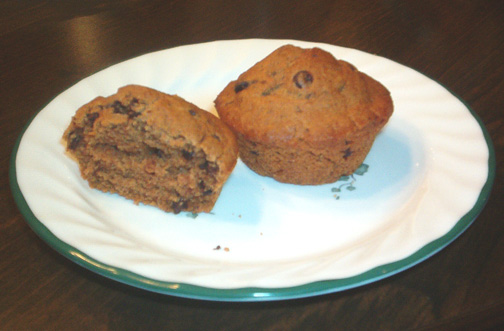
Mix together dry ingredients:
2 cups flour (I used 1 cup King Arthur traditional whole wheat, 1/2 cup whole barley flour, 1/2 cup tapioca flour. If using a gluten-free flour such as rice or amaranth, I suggest using 1/3 to 1/2 the total amount of tapioca flour.)
1 1/2 tsp cream of tartar (or 4 tsp lemon juice or cider vinegar)
3/4 tsp baking soda
1/2 tsp salt
3 Tbsp turbinado sugar or C & H brown sugar
In another container, blend together
1 Tbsp flaxseed meal mixed with 3 1/2 Tbsp hot water & heated until gelled
3 Tbsp oil (I used grapeseed oil)
1 cup water or your favorite milk substitute
Make a hollow in the top of the dry ingredients. Add wet ingredients all at once and quickly mix just until barely blended.
Stir in approximately 1/4 to 1/2 cup of Enjoy Life chocolate chips, or the fruit or nuts of your choice (optional).
Spoon into oiled muffin pan, filling cups about 2/3 to 3/4 full.
Bake at 425 degrees for 20 minutes.
Makes 12 regular-sized muffins.
Saturday, November 18, 2006
Pumpkin or Squash Pie Reinvented

This pumpkin or squash pie is free of dairy, soy, eggs, gluten, rice and most other allergens. It's also vegan.
The pie has a very silky texture, softer and more pudding-like than a traditional pumpkin pie. To make a grainless pumpkin pudding, just bake the filling with no crust.
I was going to try making it without the baking soda and cream of tartar, and calculate the baking time more carefully. But then I discovered that I'd developed an allergy to coconut, so I won't be making it again.
If you try it, please do post any improvements or adjustments you make in the comments.
Feel free to adjust the spice amounts for whatever you usually use in a pumpkin pie. Remember that you're not adding the eggs, so you'll probably want a lesser amount of spice in a pie than one with eggs.
Pumpkin or Squash Pie
First, make crust. Gluten-free recipe here, grain-free version here.
Put crust in pie pan and bake for 5-10 minutes or until crust is just a bit firm on the bottom.
Pie filling:
Mix together dry ingredients:
1/4 cup tapioca flour
1 1/2 tsp ground cinnamon
1/4 tsp ground ginger (I measured this heaping)
1/4 tsp ground nutmeg
1/4 tsp ground cloves (measured scant)
1/4 tsp salt
1/2 tsp baking soda
1/4 tsp cream of tartar (if allergic to grapes or sulfites, substitute about 1/2 to 1 tsp lemon juice or cider vinegar with the wet ingredients)
Combine in a separate bowl:
1 15-oz can Libby's Pure Pumpin (not pumpin pie filling--just plain pumpkin) or 1 1/2 to 2 cups squash puree*
1/2 cup coconut milk (I use Trader Joe's light coconut milk; it's corn-free and lower-fat, too) or other milk substitute (for a recipe using plain water, see here)
1/2 cup pure honey or other liquid sweetener
Blend pumpkin mixture into dry ingredients until smooth, and immediately pour into pie crust.
Bake at 350 degrees for 30-45 minutes or until set in the middle. A knife will not come out clean when it's finished; it will still be very gooey in the middle until chilled. Don't be concerned if it puffs up a bit in the middle and then collapses as it cools.
Chill before serving.
* If you want to use a fresh pumpkin (or any kind of winter squash such as butternut or acorn squash), you can make your own squash puree.
Bake it whole (or cut in half face-down with 1/2 inch of water in the pan) at 350 degrees in the oven until tender. Scoop out the flesh and mash it with a potato masher.
Then use the blender to process it into a smooth puree. You can add all the other ingredients to the blender and just mix it all up in there if you like instead of mixing wet and dry ingredients separately.
Tuesday, November 14, 2006
Non-Dairy Clam Chowder (or Not-Potato Soup)
New-England style clam chowder. It was one of those foods I thought I'd never enjoy again, at least for a very long time.
But, thanks to The Complete Food Allergy Cookbook: The Foods You've Always Loved Without the Ingredients You Can't Have, bought for me by DH, the impossible is happening fairly frequently around here.
This clam chowder is dairy, gluten, soy and nightshade free. It can be made without the clams for you vegans out there, too. (In that case, it's not clam chowder; it's mock potato soup.)
With no dairy and no nightshades, you can finally eat clam chowder again.
#####################
The book gives several variations on the recipe, including using other milk substitutes. I think next time I'll use a bit less onion, but I really enjoyed the soup.
I think I almost prefer the taste of cassava to that of a regular potato. It has a very similar taste and texture, but just slightly sweet and without that sort of sour flavor that potatoes sometimes have. It is, however, much tougher to cut up and takes longer to cook, and you have to be sure to remove all the little woody bits.
I like this food allergy cookbook. Rather than just giving recipes (although it has lots of those, too) the goal is to teach you to substitute and improvise so that you can alter existing recipes to meet your dietary needs. I highly recommend the book.
The information is truly helpful and fairly exhaustive, and almost every recipe I've tried so far has become one to add to the oft-repeated stash of favorites. There's also some helpful information about identifying and coping with food allergies in general.
The book tells you how to cook without the things you may need to avoid--including preservatives, animal products, dairy, eggs, soy, gluten, corn and other grains, sugar, nightshade plants, and even chocolate. The only area I noticed in which it is really lacking is that of tree nut and legume allergies; several of the recipes require either soy or some kind of tree nut (none call for peanuts), and cooking without tree nuts is not particularly discussed.
This cookbook has quickly become my most often-used cookbook. Especially the recipe for Universal Muffins--my kids and I love that one, and it's so very flexible. I make it sometimes several times a week.
But, thanks to The Complete Food Allergy Cookbook: The Foods You've Always Loved Without the Ingredients You Can't Have, bought for me by DH, the impossible is happening fairly frequently around here.
This clam chowder is dairy, gluten, soy and nightshade free. It can be made without the clams for you vegans out there, too. (In that case, it's not clam chowder; it's mock potato soup.)
With no dairy and no nightshades, you can finally eat clam chowder again.
#####################
Clam Chowder (From The Complete Food Allergy Cookbook, by Marilyn Gioannini)
1 hour * 4 servings
This classic New England style clam chowder, thick with "potatoes", onion, and "cream", tastes exactly like the real thing. The "potato" is yuca (cassava) root, available in most supermarkets; the "cream" is cashew milk.
Absolutely delicious!
About 1 lb. yuca root
1/8 tsp. salt
2 Tbs. vegetable oil
1 large onion, chopped
1/3 cup raw cashews
1 (6 1/2 oz) can minced clams with juice (check labels when shopping--some have preservatives)
salt and pepper
Peel yuca root and dice into 1/2 inch cubes. Cover generously with water, add salt, and bring to a boil in a medium saucepan. Simmer, covered, 30 to 40 minuts, or until very soft. Stir occasionally. While the yuca is cooking, heat vegetable oil in a medium skillet. Add chopped onion and saute until soft. Add the onion to the saucepan with the yuca root.
Put cashews into blender container. Blend briefly until they are broken up. Aded 1 1/2 cups of water and blend on high until cashews are completely pulverized, about 3 minutes. When the yuca is soft, add clams to the saucepan. Add cashew milk and heat just until hot. Serve immediately. Add salt and pepper to the bowl to taste, and serve with toast.
The book gives several variations on the recipe, including using other milk substitutes. I think next time I'll use a bit less onion, but I really enjoyed the soup.
I think I almost prefer the taste of cassava to that of a regular potato. It has a very similar taste and texture, but just slightly sweet and without that sort of sour flavor that potatoes sometimes have. It is, however, much tougher to cut up and takes longer to cook, and you have to be sure to remove all the little woody bits.
I like this food allergy cookbook. Rather than just giving recipes (although it has lots of those, too) the goal is to teach you to substitute and improvise so that you can alter existing recipes to meet your dietary needs. I highly recommend the book.
The information is truly helpful and fairly exhaustive, and almost every recipe I've tried so far has become one to add to the oft-repeated stash of favorites. There's also some helpful information about identifying and coping with food allergies in general.
The book tells you how to cook without the things you may need to avoid--including preservatives, animal products, dairy, eggs, soy, gluten, corn and other grains, sugar, nightshade plants, and even chocolate. The only area I noticed in which it is really lacking is that of tree nut and legume allergies; several of the recipes require either soy or some kind of tree nut (none call for peanuts), and cooking without tree nuts is not particularly discussed.
This cookbook has quickly become my most often-used cookbook. Especially the recipe for Universal Muffins--my kids and I love that one, and it's so very flexible. I make it sometimes several times a week.
Saturday, October 28, 2006
Pumpkin Spice Muffins (free of gluten & most allergens)
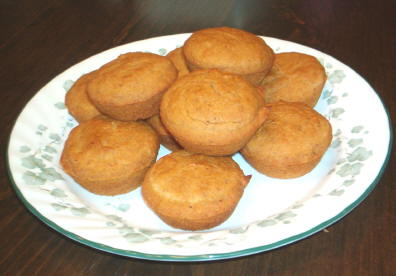
This is a recipe I came up with tonight to use some of our pumpkin bounty. These muffins are egg-free, gluten-free, corn-free, vegan and non-dairy. The flaxseed takes the place of eggs and oil.
The flavor and texture are quite good, but slightly too sweet for my taste. I might try it with 1/3 cup of honey next time, adding a tablespoon or two of water if needed.
You could substitute 1 cup of any kind of gluten-free flour for the rice flour, or 2 cups of gluten-containing flour for the rice and tapioca flours. Sweet or glutinous rice flour should work as a substitute for the tapioca flour.
Brown rice syrup, agave nectar, or another sweetener should be substituted for the honey if you will be feeding the muffins to a child under 1 year of age. It's debatable whether baking destroys any potential botulism spores in honey.
If you want less of a pumpkin pie/gingerbread flavor, you can leave out some of the spices and just include the cinnamon.
Preheat oven to 350 degrees and grease muffin pan.
Blend dry ingredients:
1 cup brown rice flour
1 cup tapioca flour
3/4 tsp cream of tartar (substitute 2 tsp lemon juice or apple cider vinegar added to the wet ingredients if allergic to grapes)
1 tsp baking soda
1/4 tsp salt
1 1/2 tsp cinnamon
1/2 tsp nutmeg
1/4 tsp ginger
1/4 tsp allspice (can substitute cloves)
Beat together:
1/2 cup honey
1 Tbs ground flax seed, mixed with 3 Tbs hot water and cooked until gelled (you can whip this when cooled to give the muffins more lift, if desired)
Add to honey mixture:
1 1/4 cups pumpkin puree, or 1 cup mashed or canned pumpkin plus 1/4 cup water
Quickly mix honey/pumpkin mixture into dry ingredients, stirring just until there are no large lumps
Fill muffin tins 3/4 full and bake at 350 degrees for 30-35 minutes.
Makes 12 muffins.
Friday, October 27, 2006
Banana Sweet Potato Frosting
This icing recipe is from Bridget at Never Here Again. It's egg-free, dairy-free, corn-free and free of refined sugars--hard to find in a frosting recipe!
Mix together:
1 cup mashed sweet potato
1 ripe banana (could also use amasake)
2 T maple syrup or brown rice syrup
1 t orange juice
We can't have sweet potato or maple syrup, so if anyone tries this please let me know how it is.
Mix together:
1 cup mashed sweet potato
1 ripe banana (could also use amasake)
2 T maple syrup or brown rice syrup
1 t orange juice
We can't have sweet potato or maple syrup, so if anyone tries this please let me know how it is.
Subscribe to:
Posts (Atom)